Ban on Hijab; Act of Secularism or Discrimination

Written by: Fatima Omer
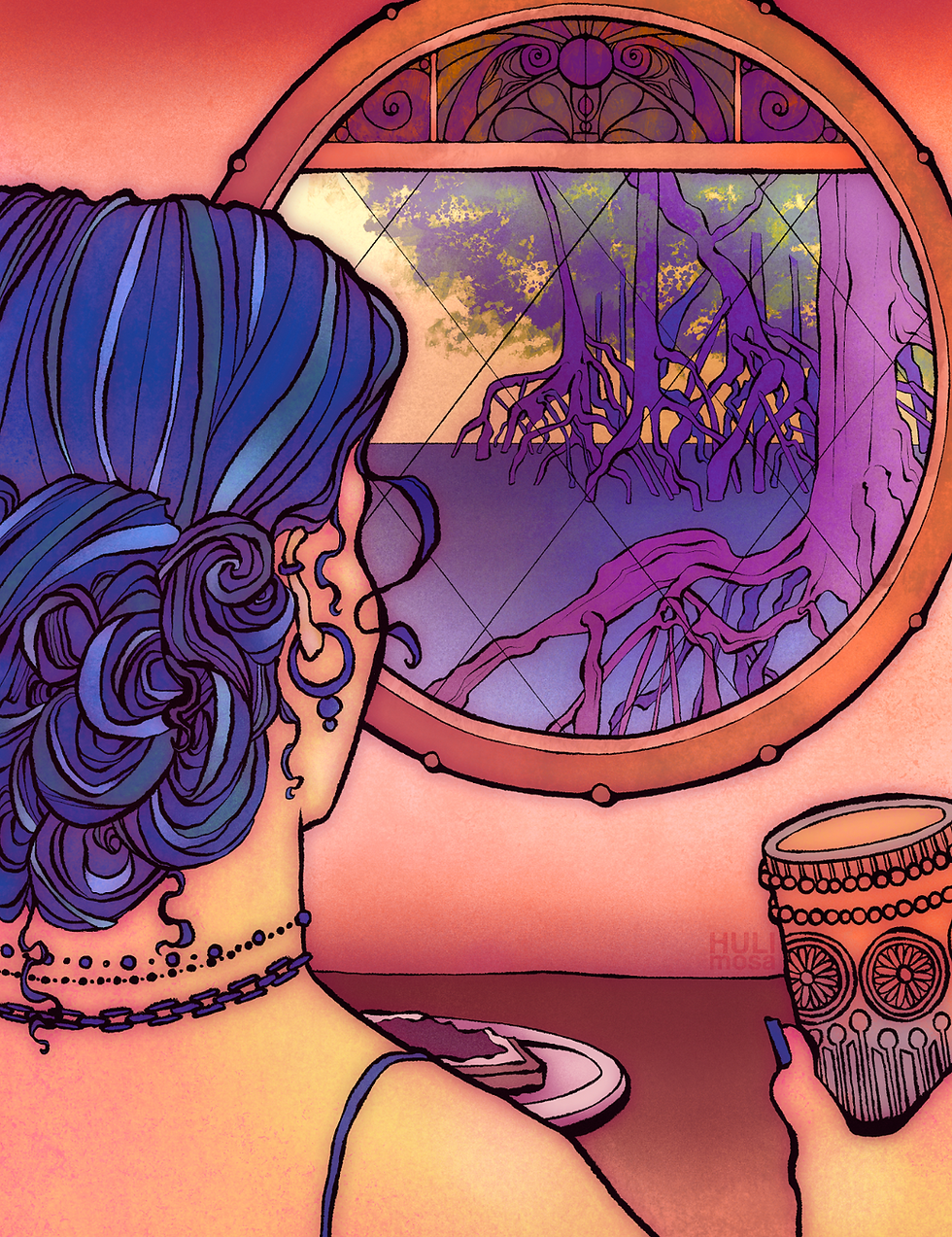
Artwork by: Vee

The Austrian parliament, on 11th December 2025, formally imposed a ban on hijab for Muslim girls under the age of 14. Repeated non-compliance with the rule would lead to a fine up to €800. This law is to be enforced from next September, the beginning of new school year. Since this law is neither new nor one of its kind, international society is once again riddled with the question: How could a piece of clothing become so problematic?
A similar law in 2019, banning hijab for girls under 10 was revoked by their constitutional court on the basis of it targeting a specific minority (Muslims) and or abiding by the principles of equality yet the coalition government consisting of three parties: ÖVP (Austrian people’s party), SPÖ (Social Democratic Party) and NEOS managed to pass the law with an obvious majority with only The Green party voting against it. Commenting on the law’s revokablity from the court, the leaders said that “we have done our best.”
When asked for a justification for such a policy, Yannick Shetty, parliamentary leader of NEOS argued “It’s not a measure against a religion. It’s a measure to protect the freedom of girls in this country.” He continued by calling hijab “oppressive” and “sexualizing” for minors. The spokesperson of FPO (Freedom Party of Austria), Ricada Berger said “There needs to be a general ban on headscarves in schools, political Islam has no place here.”
This ban is estimated to impact around 12,000 young girls. Several international NGOs have called out this law as “Anti-Islam” & “derogatory towards Muslims”. Amnesty International has also predicted this law to “add to the racist climate towards Muslims.” The Official Islamic Community in Austria (IGGÖ) has issued a statement on its website saying “instead of empowering children, they will be stigmatised and marginalised.” They have also voiced their fears about this causing a “split in society.” Managing director at Amazone women's rights association, Angelica Atzinger spoke out against the ban saying it “sends girls the message that decisions are being made about their bodies and that this is legitimate.”
The Convention on the Rights of the Child, an international treaty protecting and promoting rights of children, adopted by United Nations on 20 November 1989 has multiple articles regarding the religious freedom of all children in a state whether their religion constitutes the majority or minority of the population.
Its article 2 states that “States Parties shall take all appropriate measures to ensure that the child is protected against all forms of discrimination or punishment on the basis of the status, activities, expressed opinions, or beliefs of the child's parents, legal guardians, or family members.” This clearly states that the state is responsible to ensure no child faces any sort of discrimination on the basis of one's religion. Hence making the state a protective shield for a child.
The article 14 says “States Parties shall respect the right of the child to freedom of thought, conscience and religion.” It means that every child has the right to freely express and practice his or her religion (unless derogatory towards others). It also implies that a state must consider every child and his religious identity before proposing or enforcing any policy affecting him.
The article 30 of same treaty says “In those States in which ethnic, religious or linguistic minorities or persons of indigenous origin exist, a child belonging to such a minority or who is indigenous shall not be denied the right, in community with other members of his or her group, to enjoy his or her own culture, to profess and practise his or her own religion, or to use his or her own language.” Here, the freedom of expression of a child is reaffirmed.
It is important to note that Austria is not the only European country that has put a ban on hijab. France, over a span of years, has implemented several bans on hijab, niqab (face covering veils) and burqas (loose robes worn by Muslim women) in various sectors of life including schools, sports and other public areas. This led to the exclusion of many hijabi athletes from their respective teams, even banning their participation in the 2024 Paris Olymipics. While France has justified the bans by expressing secularism, critics have argued about such implementations being a violation of human rights and discriminatory towards religious minorities.
At a time when Islamophobia is rising and Muslims throughout the world are prone to various forms of racism including verbal and digital, such acts of human rights’ violation by governments of sovereign states themselves is a matter of great concern. This is not just a matter of concern for Muslims but a huge issue regarding women rights as young girls and women aren't being permitted the clothing of their choice. It also gives a concerning message to the people that states and governments are opposing international treaties and controlling the freedom of expression and the right to practice religion of choice.
Human rights organizations including Muslim and feminist communities are correct to protest and voice their complains against such actions as the states are supposed to protect it's citizens and ensure their sovereignty without any regards to their religious identity yet such laws have only proven the opposite. It's a horrifying thought that when the ruling powers themselves cause such differences in communities, what would be the conditions faced by the minorities in their everyday life.

Comments